
Key Takeaways:
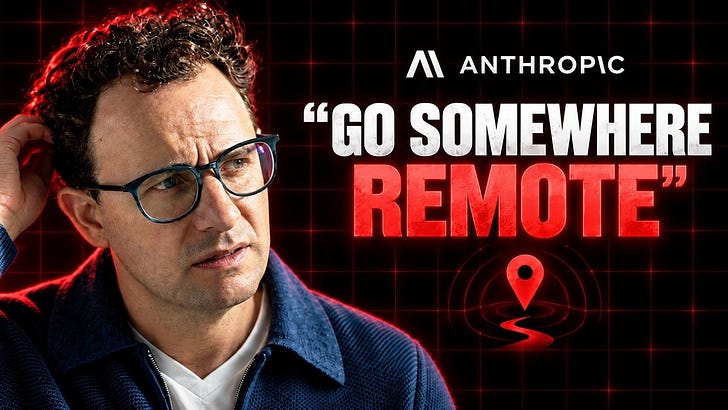
🧠 Anthropic’s rumored Claude Next is attracting attention following unofficial demonstrations suggesting advanced coding, spatial reasoning, and visual animation capabilities.
🎨 AI-generated visual animations reportedly demonstrate how increasingly capable models can transform written instructions into sophisticated, code-driven graphical experiences.
🔍 Claude Next remains unconfirmed, with no official model documentation, pricing, or model identifiers establishing that Anthropic has formally released the system.
🤖 Google Cloud’s Gemini agent is described as a unified enterprise AI system capable of coordinating complex workflows across applications and selecting appropriate models for different tasks.
🏢 Enterprise AI agents are becoming more sophisticated, combining grounded organizational data, cross-application memory, and specialized sub-agents to automate business operations.
Summary
In this episode of the Colaberry AI Podcast, we explore two developments shaping the next generation of artificial intelligence: rumors surrounding Anthropic’s Claude Next model and Google Cloud’s expanding vision for autonomous enterprise AI agents.
Together, these developments illustrate how artificial intelligence is evolving beyond conversational assistance toward systems capable of generating sophisticated software experiences and coordinating complex business operations.
The first development centers on Claude Next, an advanced AI model reportedly being tested through Anthropic’s coding platform.
According to the source, online users have shared demonstrations suggesting that an unreleased Claude model can generate sophisticated visual animations entirely through written code.
These demonstrations have attracted attention because they reportedly showcase more than conventional code generation.
Instead of producing simple scripts or static interfaces, the rumored system appears capable of translating natural-language instructions into complex visual outputs involving spatial relationships, motion, graphical rendering, and interactive behavior.
If independently verified, capabilities of this kind could represent an important advancement in AI-assisted software development.
Developers, designers, and creative professionals could potentially use increasingly capable coding agents to generate animated interfaces, interactive prototypes, visual simulations, and other sophisticated digital experiences without manually constructing every component.
However, an important distinction remains.
Anthropic has not been established by the supplied source as having officially announced or released Claude Next.
The reported demonstrations originate from unofficial testing claims and social media discussions. The absence of official documentation, published pricing, and identifiable model information makes it difficult to determine whether the demonstrations involve a new frontier model, an experimental configuration, or an existing system operating with additional tools.
The episode therefore highlights both the excitement surrounding advanced generative coding and the importance of distinguishing verified product announcements from speculative model leaks.
Meanwhile, the second major development focuses on enterprise artificial intelligence.
According to the source, Google Cloud has announced a Gemini agent designed to coordinate sophisticated workflows across multiple enterprise applications.
Rather than functioning as a standalone assistant that responds to isolated questions, the system is described as a unified environment where AI agents can access relevant information, select suitable models, and execute tasks across connected business systems.
One of its notable capabilities is dynamic model selection.
Different enterprise tasks require different forms of intelligence. Some may involve document analysis, while others require reasoning, software execution, data retrieval, or workflow coordination.
The Gemini agent is described as selecting the most appropriate underlying model based on the task, potentially allowing organizations to balance performance, efficiency, and operational requirements.
Another important capability is deep data grounding.
Enterprise AI systems need access to reliable organizational information to produce useful results. By grounding responses and actions in connected business data, an agent can potentially operate with greater awareness of company-specific processes, documents, and operational context.
The platform also reportedly incorporates multi-application memory, allowing agents to retain relevant context while working across different tools and environments.
This addresses a common limitation of traditional AI assistants: information and task context often become fragmented when work moves between applications.
By maintaining continuity across connected systems, enterprise agents could potentially coordinate more sophisticated, multi-stage workflows.
The source also highlights the use of automated sub-agents.
Instead of requiring one AI system to handle every part of a complex assignment, a coordinating agent could delegate specialized activities to smaller agents responsible for individual tasks.
For example, an enterprise workflow might involve retrieving information, analyzing data, preparing documentation, and coordinating follow-up actions. Specialized agents could handle different stages while a central system manages the overall process.
This approach reflects the broader movement toward multi-agent orchestration, where multiple AI capabilities operate together to achieve a shared objective.
For large organizations, the potential implications are significant.
Enterprise AI could gradually evolve from helping employees complete individual tasks to supporting end-to-end business processes, connecting information and actions across departments, applications, and operational systems.
However, greater autonomy also creates new responsibilities.
Organizations adopting these systems must consider data privacy, access permissions, information accuracy, security, auditability, and human oversight.
An agent that can access multiple enterprise applications may be highly useful, but it also requires carefully defined boundaries around what information it can retrieve and which actions it is authorized to perform.
Together, the reported Claude Next demonstrations and Google Cloud’s Gemini agent developments point toward two complementary directions in artificial intelligence.
The first is generative capability: AI systems becoming more proficient at creating complex software, animations, interfaces, and digital experiences.
The second is operational autonomy: AI systems becoming more capable of coordinating tools, applications, models, and business workflows with reduced manual intervention.
Ultimately, the next stage of AI adoption may depend on how effectively organizations combine these capabilities.
The competitive advantage will increasingly come not simply from accessing powerful models, but from understanding how to build, integrate, deploy, and govern intelligent systems that solve real business problems.
The central question is shifting from:
“What can AI generate?”
To:
“What can AI build, coordinate, and reliably accomplish?”
As generative coding and autonomous enterprise agents continue advancing, this transition could reshape how organizations design software, manage operations, and create value through artificial intelligence.
🧾 Ref:
Claude Next Leak and Enterprise AI Agents – YouTube
🎧 Listen to our audio podcast:
👉 Colaberry AI Podcast: https://colaberry.ai/podcast
📡 Stay Connected for Daily AI Breakdowns:
🔗 LinkedIn: https://www.linkedin.com/company/colaberry/
🎥 YouTube: https://www.youtube.com/@ColaberryAi
🐦 Twitter/X: https://x.com/colaberryinc
📬 Contact Us:
📞 (972) 992-1024
#DailyNews #Ai
🛑 Disclaimer:
This episode is created for educational purposes only. The discussion summarizes claims and information presented in the referenced source and should not be interpreted as independent verification of those claims. Reports concerning Claude Next, unofficial model demonstrations, and emerging AI capabilities may be speculative or subject to change. Readers and listeners should consult official company announcements for confirmed product availability and specifications.
All rights to referenced materials belong to their respective owners. If you believe any content may be incorrect or violates copyright, kindly contact us at ai@colaberry.com, and we will address it promptly.