
Key Takeaways:
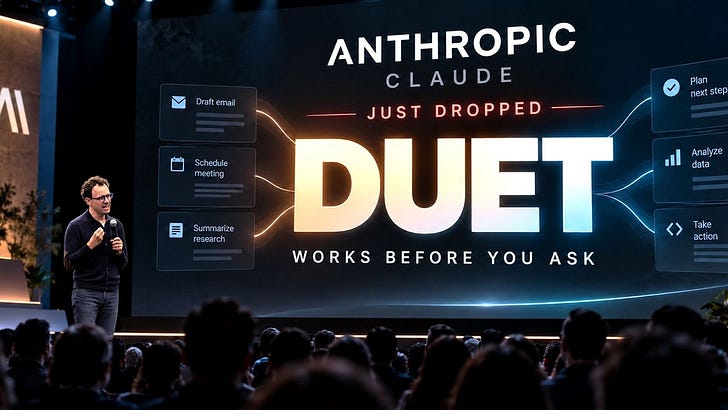
🚀 GPT-6.2 Astra and Claude Mythos 5.5 are reportedly being developed by OpenAI and Anthropic, with leaks suggesting expanded context windows and advanced generative capabilities.
🧠 Massive context windows could enable next-generation AI systems to process larger documents, maintain extended conversations, and manage more complex workflows.
🔬 Yann LeCun’s AMI Labs is exploring alternative AI architectures that emphasize abstract representations and more efficient approaches to learning.
⚡ Smaller, concept-driven models reportedly demonstrate the potential to approximate internal representations of much larger systems while requiring fewer computational resources.
🤖 Longat 2.5 and multi-agent architectures are pushing autonomous software engineering forward through coordinated AI agents capable of managing complex development tasks.
Summary
In this episode of the Colaberry AI Podcast, we explore the latest reported developments in next-generation AI models, alternative neural architectures, and autonomous multi-agent systems.
According to the source, OpenAI and Anthropic are preparing new models reportedly named GPT-6.2 Astra and Claude Mythos 5.5. Leaks suggest these systems could introduce significantly larger context windows and more advanced generative capabilities, although their specifications and release plans remain unconfirmed.
Larger context windows could allow AI systems to analyze extensive codebases, process complex documentation, and maintain continuity across longer reasoning and development workflows.
Meanwhile, Yann LeCun’s AMI Labs is investigating a different approach to artificial intelligence. Rather than relying exclusively on increasingly large models, the research described in the source emphasizes learning abstract representations of concepts and the physical world.
The source suggests that smaller models trained using these approaches can reproduce certain internal representations of substantially larger systems, raising important questions about the relationship between model size, computational efficiency, and intelligence.
Another development involves Longat 2.5, a reported large-scale architecture designed to support advanced multi-agent software engineering. Such systems coordinate multiple AI agents to perform specialized tasks, potentially improving complex coding, planning, and autonomous execution.
Together, these developments highlight two competing directions in AI research: scaling computational power to achieve greater capabilities and developing more efficient architectures that learn and reason differently.
The broader implication is that future AI progress may depend on more than model size alone. Architecture, representation learning, agent coordination, and computational efficiency could become equally important.
Ultimately, the next generation of artificial intelligence may be defined by systems that combine powerful reasoning, efficient world understanding, and reliable autonomous execution.
🧾 Ref:
Next-Gen AI Model Leaks and Architecture Debates – YouTube
🎧 Listen to our audio podcast:
👉 Colaberry AI Podcast: https://colaberry.ai/podcast
📡 Stay Connected for Daily AI Breakdowns:
🔗 LinkedIn: https://www.linkedin.com/company/colaberry/
🎥 YouTube: https://www.youtube.com/@ColaberryAi
🐦 Twitter/X: https://x.com/colaberryinc
📬 Contact Us:
📞 (972) 992-1024
#DailyNews #Ai
🛑 Disclaimer:
This episode is created for educational purposes only. The discussion summarizes claims and information presented in the referenced source and should not be interpreted as independent verification of those claims. Reported model names, release plans, architectural breakthroughs, performance comparisons, and autonomous capabilities should be confirmed through official announcements and independently validated technical research.
All rights to referenced materials belong to their respective owners. If you believe any content may be incorrect or violates copyright, kindly contact us at ai@colaberry.com, and we will address it promptly.