
Key Takeaways:
🧠 Discussions around GPT-6 are shifting attention toward autonomous AI capable of complex reasoning and long-term planning
⚙️ AI development is moving beyond chatbots toward agentic systems that can perform multi-step tasks independently
🏛️ Frontier AI models are increasingly being viewed as strategic national assets with growing government involvement
📈 The AI race is evolving from benchmark performance to real-world economic productivity and automation
🌍 Competition among leading AI companies continues to accelerate innovation while raising important governance and safety questions
Summary
In this episode of the Colaberry AI Podcast, we examine recent discussions surrounding GPT-6, the concept of the technological singularity, and the rapidly evolving future of autonomous artificial intelligence.
According to the source, OpenAI is developing increasingly capable AI systems that extend beyond conversational assistants toward agentic AI—models designed to perform complex reasoning, long-term planning, and multi-step problem solving with greater autonomy. This reflects a broader industry trend in which AI is becoming capable of executing sophisticated workflows rather than simply responding to prompts.
The discussion also explores claims that future frontier models could contribute to advanced scientific discovery by assisting researchers with mathematics, engineering, software development, and scientific experimentation. While reports highlight impressive demonstrations of AI capabilities, such developments should be understood within the context of ongoing research and continued evaluation as these technologies mature.
Another major theme is the growing relationship between artificial intelligence and national strategy. As frontier AI becomes increasingly valuable for economic competitiveness, cybersecurity, scientific innovation, and defense, governments are taking a more active interest in how these powerful technologies are developed, governed, and deployed. This reflects the emergence of AI as both a commercial platform and a strategic national capability.
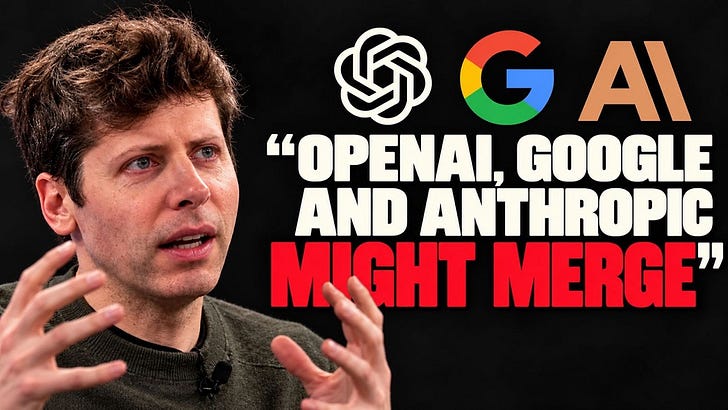
The source also highlights intensifying competition among leading AI organizations. As companies continue investing in increasingly capable models, success is no longer measured solely by benchmark scores. Instead, the focus is shifting toward systems that can automate knowledge work, improve productivity, support enterprise decision-making, and create measurable economic value across industries.
At the same time, these advances bring important questions about governance, transparency, safety, and responsible deployment. As AI systems become more autonomous, researchers, policymakers, and industry leaders continue working to establish frameworks that encourage innovation while maintaining appropriate oversight and accountability.
Ultimately, this episode explores how the AI industry is entering a new phase in which autonomous agents, frontier reasoning models, and intelligent digital workforces may redefine how organizations conduct research, solve complex problems, and create value. Whether described as the beginning of a new technological era or simply the next stage of AI evolution, the convergence of advanced reasoning, autonomy, and strategic investment is likely to shape the future of artificial intelligence for years to come.
🧾 Ref:
The Singularity and the Sovereign Dawn of GPT-6 – YouTube
🎧 Listen to our audio podcast:
👉 Colaberry AI Podcast: https://colaberry.ai/podcast
📡 Stay Connected for Daily AI Breakdowns:
🔗 LinkedIn: https://www.linkedin.com/company/colaberry/
🎥 YouTube: https://www.youtube.com/@ColaberryAi
🐦 Twitter/X: https://x.com/colaberryinc
📬 Contact Us:
📞 (972) 992-1024
#DailyNews #Ai
🛑 Disclaimer:
This episode is created for educational purposes only. All rights to referenced materials belong to their respective owners. If you believe any content may be incorrect or violates copyright, kindly contact us at ai@colaberry.com, and we will address it promptly.